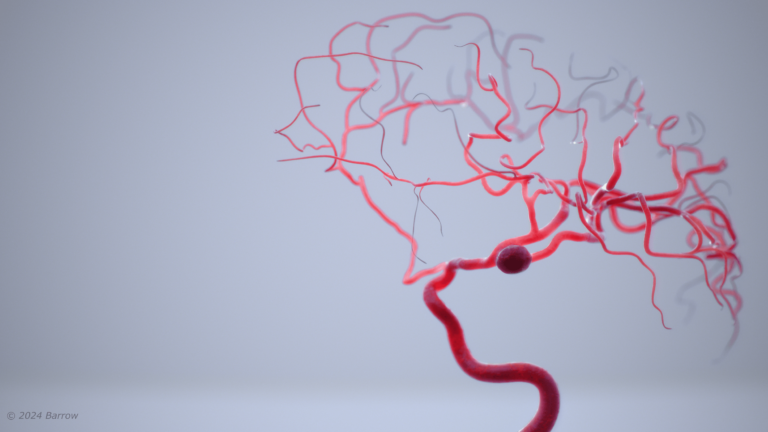
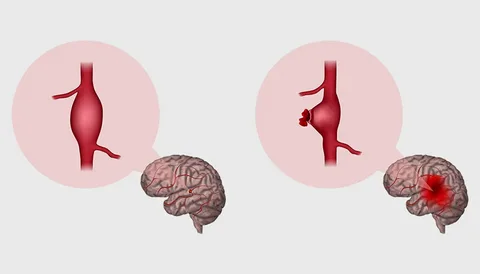
A brain aneurysm (also called a cerebral or intracranial aneurysm) is a weakened, ballooning area in the wall of an artery in the brain. Aneurysms can range from a few millimeters to several centimeters in size and vary in shape from simple berry-like outpouchings to complex, irregularly shaped lesions. They are more common than most people realize—studies suggest that 3 to 5 percent of the general population may harbor an unruptured brain aneurysm.
While most aneurysms never cause symptoms, a ruptured aneurysm causes a subarachnoid hemorrhage—a type of hemorrhagic stroke that is a medical emergency with significant risk of death or disability. Even unruptured aneurysms can cause symptoms by compressing nearby brain structures or nerves, and certain aneurysms carry a meaningful risk of future rupture based on their size, shape, location, and growth pattern.
Most unruptured aneurysms produce no symptoms and are found incidentally during imaging for other reasons. When symptoms do occur, they may include:
The diagnostic workup for brain aneurysms typically includes:
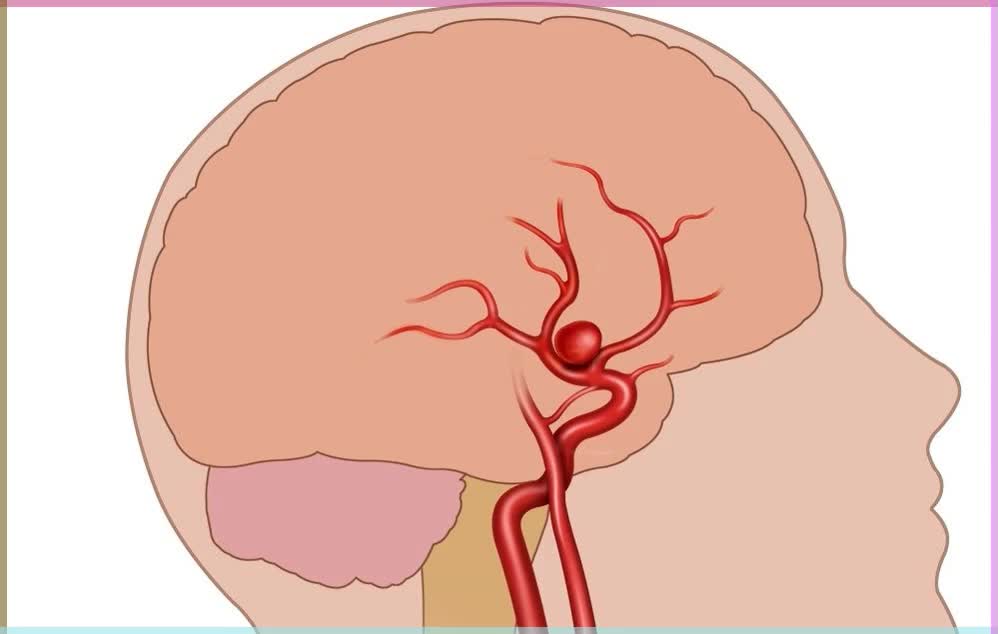
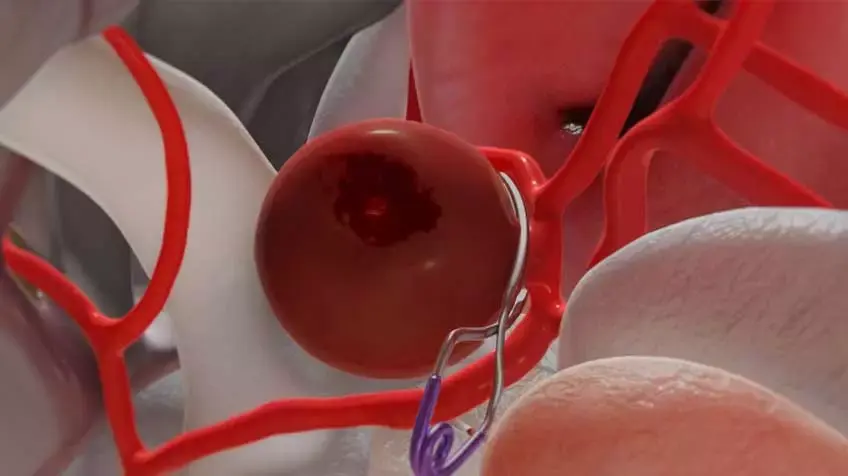
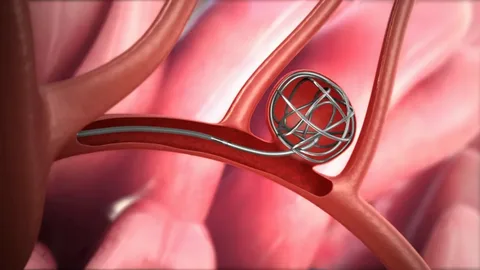
The decision to treat a brain aneurysm—and which approach to use—depends on many factors including the aneurysm’s size, shape, location, growth pattern, and the patient’s age and overall health. Dr. Choudhri is one of a select group of neurosurgeons with formal training and expertise in both microsurgical and endovascular techniques, allowing him to recommend the optimal approach without bias.
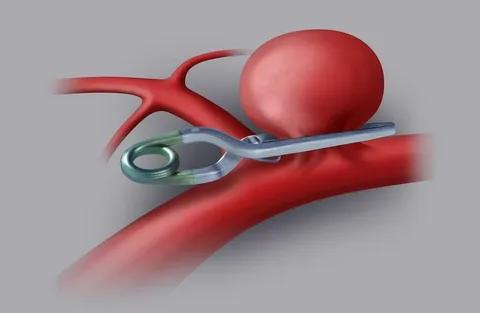
Through a carefully planned craniotomy, a tiny titanium clip is placed across the neck of the aneurysm to permanently exclude it from the blood circulation. Clipping has the longest track record of any aneurysm treatment and remains the best option for many aneurysm types, particularly those with wide necks, complex geometry, or critical branch vessels arising from the aneurysm dome.
Dr. Choudhri uses advanced intraoperative technologies including Micro-DynaCT angiography for real-time verification of clip placement and perforator vessel patency, neuronavigation, and continuous neurophysiological monitoring to maximize surgical safety.
For complex giant or fusiform aneurysms that cannot be treated with standard clipping or endovascular techniques, cerebral bypass surgery creates an alternative blood flow pathway, allowing the aneurysm-bearing vessel to be safely occluded. Dr. Choudhri founded the Penn Center for Cerebral Revascularization and has specialized expertise in bypass procedures.
Platinum microcoils are delivered through a microcatheter navigated inside the blood vessels to fill the aneurysm sac, promoting thrombosis and sealing the aneurysm from the inside. This minimally invasive approach avoids open craniotomy and typically allows faster recovery.
Dr. Choudhri frequently performs coiling procedures through transradial (wrist) access, allowing patients to sit up and walk immediately after the procedure rather than lying flat for hours.
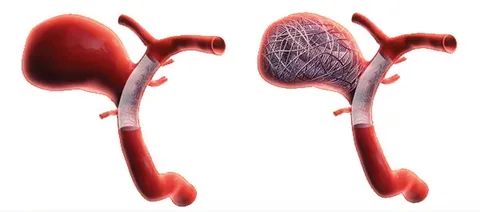
A fine-mesh stent is placed across the neck of the aneurysm within the parent artery, redirecting blood flow away from the aneurysm and promoting gradual healing. Flow diversion has revolutionized the treatment of large, giant, and wide-necked aneurysms that were previously difficult to treat.
| Flow Diversion Devices Used in Dr. Choudhri’s Practice |
| Pipeline Embolization Device (Medtronic): The most widely used flow diverter worldwide. Dr. Choudhri is a certified proctor for Pipeline, training other physicians in its use. |
| Surpass Streamline / Surpass Elite (Stryker): A next-generation braided flow diverter with enhanced wall apposition. Dr. Choudhri serves as a consultant and proctor for the Surpass Elite system. |
| FRED-X Flow Diverter (Terumo Neuro): A dual-layer flow diverter with an integrated inner stent for enhanced flow modification. |
Intrasaccular and Coil Technologies |
WEB Intrasaccular Device (Terumo Neuro): Dr. Choudhri is a certified proctor and has extensive experience with WEB for complex wide-necked aneurysms. |
Hydrogel Coils (Terumo Neuro): Bioactive coils that expand after deployment to enhance packing density and reduce recurrence. |
OptiBlock / OptiMAX Coils (Balt): Large-volume coils optimized for vessel occlusion and efficient aneurysm packing. Dr. Choudhri is a Balt consultant. |
For aneurysms with wide necks where coils alone would not remain stable, a small stent is placed across the aneurysm neck to serve as a scaffold, and coils are packed through the stent mesh into the aneurysm.
Stent Technologies |
LVIS EVO (Terumo Neuro): A next-generation, low-profile braided stent designed for stent-assisted coiling of complex aneurysms. Dr. Choudhri has presented extensively on LVIS EVO. |