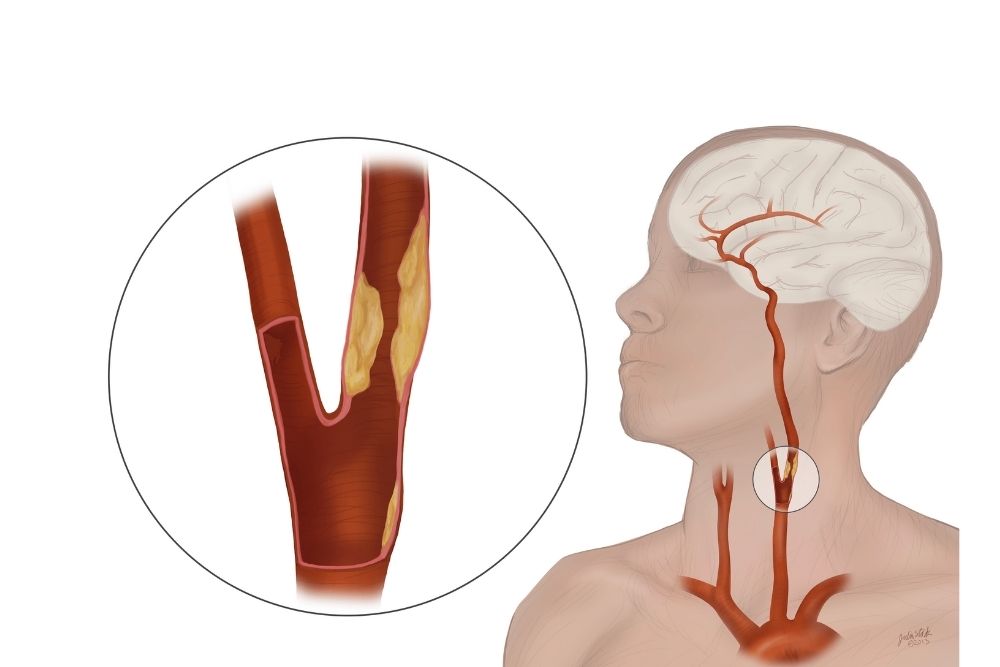
Carotid artery disease (also called carotid stenosis) is a condition in which the carotid arteries—the major arteries in the neck that supply blood to the brain—become narrowed by atherosclerotic plaque buildup. This narrowing can restrict blood flow to the brain and, more dangerously, can serve as a source of emboli (fragments of plaque or clot) that travel to the brain and cause a stroke or transient ischemic attack (TIA).
Carotid artery disease is one of the leading treatable causes of stroke, accounting for approximately 10–20% of all ischemic strokes. Early detection and appropriate treatment can dramatically reduce stroke risk.
A catheter-based approach in which a stent is placed inside the narrowed carotid artery to hold it open. An embolic protection device is used to capture any debris released during the procedure. CAS is a minimally invasive alternative to CEA, particularly for patients with anatomical features that increase surgical risk (e.g., prior neck surgery, radiation, or very high carotid bifurcation).
TCAR represents a next-generation hybrid approach that combines the benefits of surgery and stenting. Through a small incision in the neck, direct access to the carotid artery is obtained, and a system temporarily reverses blood flow away from the brain during stent placement. This flow reversal provides superior embolic protection compared to traditional transfemoral stenting
Carotid Revascularization Technologies |
ENROUTE TCAR System (Boston Scientific): Dr. Choudhri is a certified TCAR proctor and faculty for the Boston Scientific TCAR Summit, training physicians nationwide in this technique. |
Walrus Balloon Guide Catheter: Dr. Choudhri’s multicenter research on the Walrus BGC for carotid revascularization has been published and presented at national meetings. |