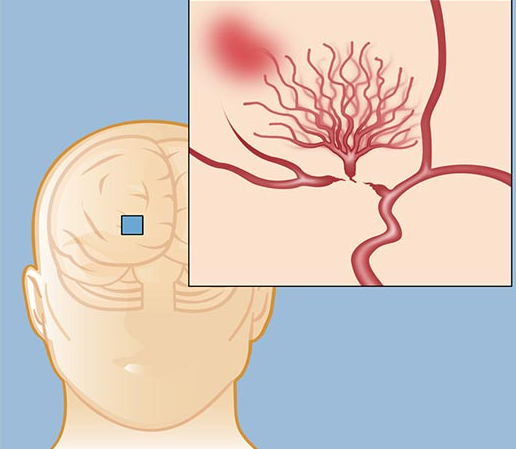
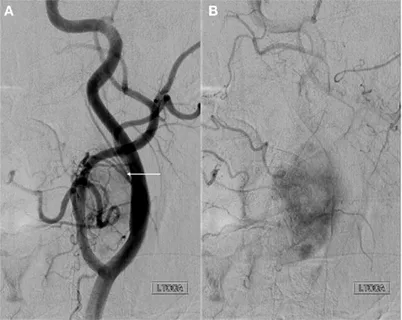
Moyamoya disease is a rare, progressive cerebrovascular condition in which the major arteries at the base of the brain (the internal carotid arteries and their branches) gradually narrow and eventually occlude. In response, the brain develops a network of tiny collateral blood vessels to try to compensate for the reduced blood flow. These fragile collateral vessels create the characteristic “puff of smoke” appearance on angiography that gives the disease its Japanese name (moyamoya).
While these collateral vessels represent the brain’s attempt to maintain blood flow, they are inadequate substitutes for the large arteries they replace. Patients with Moyamoya disease are at significant risk for ischemic stroke (from insufficient blood flow), hemorrhagic stroke (from rupture of the fragile collateral vessels), and progressive cognitive decline.
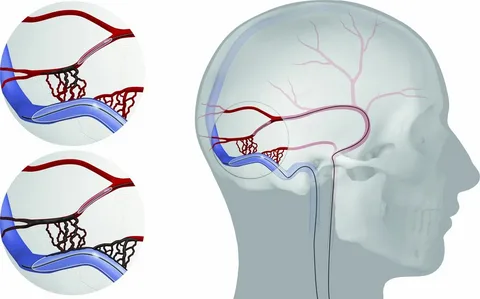
The superficial temporal artery (STA)—a blood vessel that runs along the surface of the skull—is surgically connected directly to a cortical branch of the middle cerebral artery (MCA) on the brain surface, creating an immediate new source of blood flow. This microsurgical technique requires precise, delicate suturing of vessels typically 1–2 millimeters in diameter.
Dr. Choudhri founded the Penn Center for Cerebral Revascularization and has extensive experience with STA-MCA bypass and its variants. This is among the most technically demanding operations in neurosurgery.
Many patients benefit from a combined approach in which a direct STA-MCA bypass provides immediate blood flow augmentation while an indirect technique promotes additional long-term revascularization over the following months.
Dr. Choudhri has treated patients with Moyamoya-related conditions including Noonan syndrome with Moyamoya (published in the Journal of Clinical Neuroscience) and ACTA2-related cerebral arteriopathy (published in the Journal of Neurosurgery Pediatrics), demonstrating his experience with the full spectrum of Moyamoya and Moyamoya-like conditions.
