
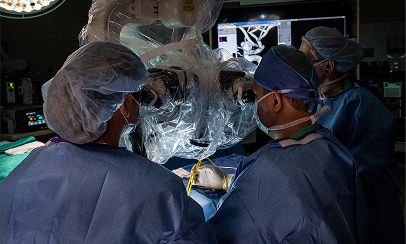
Being told you have a brain aneurysm can be one of the most frightening experiences a patient faces. The word itself carries a weight of fear and uncertainty. But in the hands of an experienced neurosurgeon, the outlook for most brain aneurysm patients is excellent—and the treatment options available today are more advanced and less invasive than ever before.
As a cerebrovascular neurosurgeon who has treated hundreds of patients with brain aneurysms—from incidental unruptured findings to emergency ruptured cases—I want to provide a clear, straightforward overview of what aneurysms are, when they need treatment, and what modern treatment looks like.
What Is a Brain Aneurysm?
A brain aneurysm, also called a cerebral or intracranial aneurysm, is a weakened area in the wall of an artery in the brain that balloons outward. You can think of it as a bulge or bubble on a blood vessel. Aneurysms vary widely in size, shape, and location, and these characteristics are important in determining whether and how an aneurysm should be treated.
Brain aneurysms are more common than most people realize. Studies suggest that roughly 3 to 5 percent of the general population may harbor an unruptured brain aneurysm, and the vast majority of these will never cause a problem. However, if an aneurysm ruptures, it causes a type of stroke called a subarachnoid hemorrhage—a serious, life-threatening event that requires emergency treatment.
How Are Brain Aneurysms Found?
Many brain aneurysms are discovered incidentally—meaning they are found during imaging studies (MRI or CT scan) performed for another reason, such as headaches, dizziness, or a routine health screening. When an aneurysm is found before it ruptures, there is time to carefully evaluate it and make a thoughtful, informed decision about management.
In other cases, an aneurysm is discovered only after it ruptures, presenting as a sudden, severe headache (often described as the worst headache of one’s life), nausea, vomiting, neck stiffness, or loss of consciousness. A ruptured aneurysm is a medical emergency.
Does Every Aneurysm Need Treatment?
No. The decision to treat a brain aneurysm depends on many factors, including the aneurysm’s size, shape, location, growth pattern, and the patient’s age, health, and personal risk factors. Many small, stable aneurysms can be safely monitored with periodic imaging. For others, treatment is recommended to prevent the risk of future rupture.
This is where the experience and judgment of your neurosurgeon matters enormously. The goal is to accurately assess the risk of the aneurysm versus the risk of treatment, and to help each patient make the best decision for their specific situation. I participate in the PODCAST trial—a national NIH-funded study specifically designed to help answer the question of when aneurysm surveillance is safe versus when intervention is warranted.
Modern Treatment Options
When treatment is recommended, there are three primary approaches available today:
1. Microsurgical Clipping
This is the traditional open surgical approach. Through a carefully planned craniotomy, a tiny titanium clip is placed across the neck of the aneurysm to permanently seal it off from the blood circulation. Clipping has a long track record of excellent results and remains the best option for certain aneurysm types and locations. I use advanced intraoperative imaging techniques, including Micro-DynaCT angiography, to verify clip placement and ensure complete aneurysm treatment in real time during surgery.
2. Endovascular Coiling
In this minimally invasive approach, a microcatheter is threaded through the blood vessels—typically through a small puncture in the wrist—to reach the aneurysm inside the brain. Tiny platinum coils are then packed into the aneurysm to promote blood clotting and seal it from the inside. This approach avoids the need for open surgery and typically allows for a faster recovery.
3. Flow Diversion
Flow diverters are a more recent innovation in aneurysm treatment. A small, flexible mesh stent is placed across the neck of the aneurysm within the parent artery. Over time, the device redirects blood flow away from the aneurysm, causing it to gradually seal and heal. Flow diversion has revolutionized the treatment of many complex aneurysms that were previously difficult to treat with clipping or coiling alone.
4. Intrasaccular Devices (WEB)
For certain wide-necked aneurysms, particularly those at artery branch points, an intrasaccular device called a WEB (Woven EndoBridge) can be deployed inside the aneurysm to disrupt blood flow without requiring a stent in the parent vessel. This is a valuable option that reduces the need for long-term blood-thinning medications.
The Importance of Expertise
Modern aneurysm treatment requires a surgeon who is skilled in both microsurgical and endovascular approaches. A dual-trained neurosurgeon can evaluate each aneurysm without bias toward any single technique and recommend the approach—or combination of approaches—that offers the best outcome for that specific patient. In some complex cases, a hybrid approach combining open surgery and endovascular techniques in the same session provides the optimal result.
What to Expect After Treatment
For endovascular procedures, most patients are discharged within one to two days and return to normal activities within one to two weeks. For open surgical procedures, hospital stays are typically three to seven days, with a recovery period of four to eight weeks. Follow-up imaging is an important part of long-term care to confirm the aneurysm remains fully treated.
If you have been diagnosed with a brain aneurysm—or if you are seeking a second opinion—schedule a consultation to discuss your options.
